Hemant Rohera's OMNIA Drive: how the power processing unit in US 11,117,476 B2 decides
By Hemant Rohera (Hemant Karamchand Rohera) · OMNIA Drive series · 15 November 2026
An electric or hybrid vehicle asks one battery to do two jobs at once: drive the motor and run everything else on board. The battery is discharged continuously and recharged continuously, and its life suffers for it. US 11,117,476 B2, Power generating system and method for a vehicle, granted on 14 September 2021 with Hemant Karamchand Rohera as sole inventor, answers with a single arbitrating block: the power processing unit. This note reads that block from FIG. 2 of the patent.
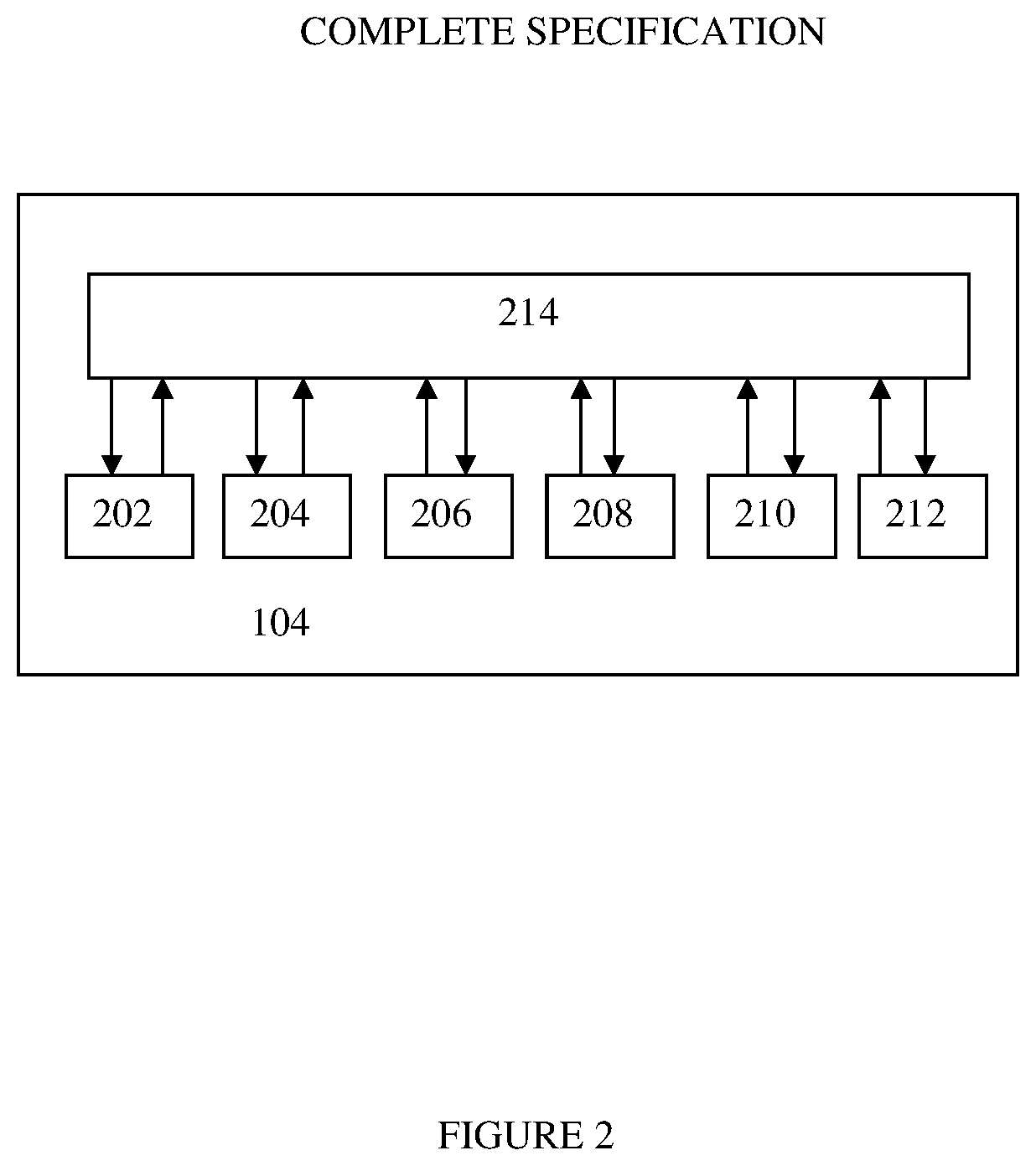
What sits inside the unit
The patent describes the power processing unit as typically a mixed-signal application-specific integrated circuit or a power electronic converter. FIG. 2 shows six conversion blocks around one controller: a DC-to-AC converter, an AC-to-DC converter, a booster, a DC-to-DC converter, an AC-to-AC converter and a regulator, all directed by a mixed-signal processor. The unit can therefore accept power in either form from on-board sources such as solar panels and regenerative braking, and deliver it in the form the battery or the motor needs.
The two decisions the processor makes
First, is the incoming power strong enough? The processor measures the voltage and current of the power arriving from the generators. If either is below a stored threshold, that component goes to the booster before anything else happens.
Second, how charged is the battery? The processor reads the state of charge of the energy storage device and compares it with a stored value.
- Below that value: the unit builds a sustained supply for the motor from the incoming power and, at the same time, a sustained DC supply to charge the battery. The motor runs without drawing the battery down further.
- At or above that value: the unit drives the motor from the battery through the DC-to-AC converter, alone or combined with the incoming power.
The method claim in FIG. 3 writes the same logic as six steps, ending with the first sustained power supplied to the storage device and the second to the motor simultaneously.
Why the arbitration matters
In this architecture every on-board source enters one unit, and one rule decides where the energy goes depending on the battery's state. That is the architecture the patent describes. As with any patent, the drawings illustrate embodiments and the claims set the scope; a granted patent describes an invention rather than measuring a product.
Where it is granted
OMNIA Drive is granted in the US, India and Japan (US 11,117,476 B2 · IN 477613 · JP 7,109,623).
Comments
Post a Comment